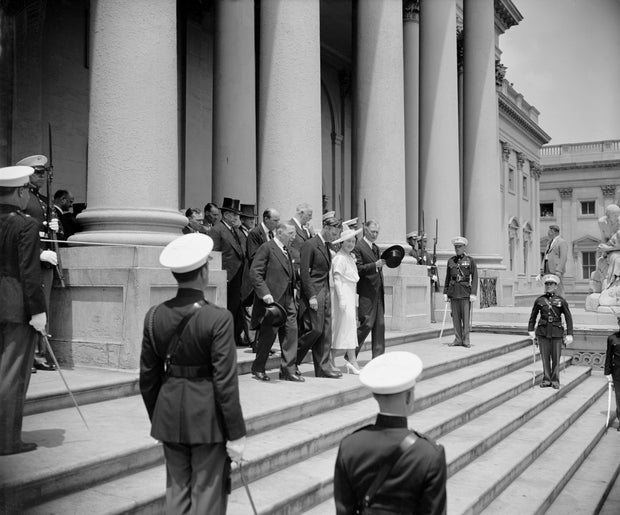
Photographs of British royalty on American soil do more than capture smiles and handshakes—they frame moments of diplomacy, soft power, and evolving international relationships. As King Charles III embarks on a state visit to the United States, the spotlight returns to a decades-long tradition of royal engagement across the Atlantic. These visits, preserved in iconic images, tell a story not just of pageantry, but of political nuance, cultural bridge-building, and personal diplomacy at the highest level.
The current visit by Charles is not a standalone event, but the latest chapter in a legacy stretching back nearly a century. From the first royal tour during the Great Depression to modern-day engagements with presidents and civic leaders, royal photos have become visual anchors of diplomatic milestones.
This is the story behind those images—what they reveal, why they matter, and how they’ve subtly shaped the special relationship between Britain and America.
The First Royal Footprint: The Duke and Duchess of York in 1939
Long before Charles III, the first major British royal visit to the U.S. came not from a king or queen, but from the future King George VI and his wife, the future Queen Elizabeth. Then known as the Duke and Duchess of York, their 1939 tour was a masterstroke of political symbolism during a time of global uncertainty.
Photographs from that summer depict a royal couple trying to appear accessible. One iconic image shows them sharing a picnic lunch with President Franklin D. Roosevelt at his Hyde Park estate. They’re seated at a simple wooden table, eating hot dogs—deliberately informal, even jarring for British sensibilities of the time.
This wasn’t just a photo op. It was strategic. With war looming in Europe, Britain needed American support. The visit—and the carefully curated images that followed—was designed to humanize the monarchy, making it relatable to American citizens and softening isolationist sentiments in Congress.
The trip lasted nearly a month and covered nine states. Images of cheering crowds in Chicago, Niagara Falls, and Detroit underscored the public’s fascination. More importantly, they laid the foundation for U.S. involvement in World War II—a relationship that would define the 20th century.
Queen Elizabeth II: The Reign of Transatlantic Diplomacy
No monarch visited the U.S. more frequently—or left a deeper visual legacy—than Queen Elizabeth II. Over seven decades, her state and working visits yielded some of the most enduring images in Anglo-American relations.
Her first visit, in 1957, came just five years into her reign. The black-and-white photographs of her addressing a joint session of Congress are now historic: poised, authoritative, yet approachably regal. She spoke of shared values, democracy, and the “special relationship”—a phrase popularized by Churchill but given emotional weight through her presence.
Subsequent trips—1976 for the American Bicentennial, 1981 during Reagan’s presidency, 2007 for the 400th anniversary of Jamestown—were all marked by carefully staged photo opportunities:
- Riding horses at the Reagan Ranch in California
- Laughing with First Lady Nancy Reagan over tea
- Planting a tree at the White House with George W. Bush
:max_bytes(150000):strip_icc():focal(728x275:730x277)/princess-catherine-prince-william-donald-trump-king-charles-iii-trump-state-visit-uk-windsor-091725-8672599a27214b6f8ffdbb07fd7596e4.jpg)
Each image carried subtext. The 1976 visit, in particular, was loaded with symbolism. By attending Fourth of July celebrations and visiting Colonial Williamsburg, the Queen acknowledged a shared heritage, even as she represented the former colonial power. One widely circulated photo shows her smiling aboard a barge on the Potomac, fireworks bursting overhead—a visual reconciliation.
What’s often overlooked is how these photos were managed. The Royal Communications team worked closely with the U.S. Secret Service and White House photographers to ensure specific moments were captured: the Queen shaking hands with schoolchildren, toasting with presidents, or touring NASA. These weren’t spontaneous—they were diplomatic tools.
Prince Charles Before the Crown: Early U.S. Engagements
Long before becoming king, Charles made his own mark in America. His visits began in the 1970s and continued through the 2010s, often focused on environmental causes, charity work, and cultural exchange.
Early photos of a young Charles—awkward in his late 20s, earnest in speech—contrast sharply with the older, more assured figure seen in later years. A 1975 image of him touring NASA’s Johnson Space Center captures his genuine interest in science, a theme he’d revisit throughout his life.
But not all moments were well-received. His 1981 trip, coinciding with his marriage to Diana, generated massive media attention. Photos of the couple waving from a convertible in Manhattan drew crowds of 250,000. Yet, behind the glamour, criticism emerged. Some Americans questioned the relevance of monarchy; others saw the visit as a celebrity tour rather than diplomacy.
Still, Charles adapted. By the 2000s, his U.S. appearances were more targeted: speaking at sustainability forums, visiting urban renewal projects, and supporting military veterans. Images from a 2018 visit to New Orleans, where he toured a youth music program, showed a different kind of royal engagement—one focused on legacy and long-term impact, not just ceremony.
King Charles III and the Modern State Visit
Now, as King Charles III, his state visit to the U.S. arrives at a complex moment. Transatlantic relations face new challenges: shifting global power, climate emergencies, and public skepticism about traditional institutions.
Photos from this visit will carry even greater weight. They’re expected to include:
- A private dinner with President Biden at the White House
- A public address on climate action
- A memorial event honoring British and American war dead
But unlike past visits, the visual narrative is no longer controlled solely by official photographers. Social media means every handshake, gesture, and expression is instantly analyzed. A frown, a delayed wave, or a wardrobe choice can trend worldwide within minutes.
Yet Charles has an advantage: authenticity. Years of advocacy work give him substance beyond protocol. Images of him speaking at a green energy summit or touring a community garden won’t feel staged—they align with a well-documented personal mission.
Still, pitfalls remain. Americans are more divided than in previous decades. Some view the monarchy as outdated; others remain loyal admirers. The photos from this trip must walk a fine line—honoring tradition while signaling relevance.
What Royal Photos Reveal About Power and Perception
Photographs of royal visits do more than document events. They shape how power is perceived.
Consider this: when Queen Elizabeth stood beside Ronald Reagan in 1982, both smiling in the White House Rose Garden, the image projected unity. The photo wasn’t just a record—it was a message to the Soviet Union, to NATO allies, and to the public: the West stood together.
:max_bytes(150000):strip_icc():focal(749x0:751x2)/king-charles-III-state-visit-of-the-president-of-the-republic-of-south-africa-112222-4-806910a78d3444cf87ef8dcb828390e0.jpg)
Similarly, a 2001 image of the Queen laying a wreath at the Pentagon after 9/11 carried emotional weight far beyond words. It signaled solidarity in grief—a moment that reinforced the depth of the U.S.-UK bond.
These images work because they blend formality with humanity. The stiff uniforms, the medals, the carriages—these symbols of tradition are balanced by candid moments: a shared laugh, a pat on the back, a child waving from a balcony.
Modern photojournalism demands more. Viewers want access, emotion, and relatability. That’s why King Charles’s visit includes planned “unscripted” moments—walking through a public park, stopping to speak with locals. These are not accidents. They’re calculated efforts to show a monarch engaged, not just exhibited.
The Diplomacy Behind the Lens
Organizing a royal state visit involves thousands of hours of coordination. Security, logistics, messaging, and image control are managed by teams on both sides of the Atlantic.
White House photographers work under strict protocols. Specific shots are “required”—the arrival handshake, the state dinner toast, the joint press statement. These ensure consistent messaging.
But the most powerful images are often the unplanned ones. A 1991 photo of Queen Elizabeth sharing an umbrella with President George H.W. Bush during a sudden downpour in Washington became instantly iconic—not because it was staged, but because it felt real.
For King Charles’s visit, expect similar attention to detail. The choice of location, attire, and even background scenery will be deliberate. A visit to a renewable energy lab, for example, reinforces his environmental advocacy. A moment with young apprentices highlights his support for vocational training.
These photos don’t just reflect policy—they advance it.
The Legacy in Every Frame
As King Charles III steps onto American soil, he carries the weight of history—not just in protocol, but in imagery. Every photo from his visit will be compared to those of his mother, his grandfather, and even his younger self.
But the goal isn’t replication. It’s evolution.
The special relationship between Britain and the U.S. is no longer just about military alliances or trade deals. It’s about shared challenges—climate change, technological disruption, democratic resilience. The royal visits of the past focused on unity in war and celebration in peace. Today’s visits must speak to a more complex world.
And so, the photos matter. They’re not just souvenirs. They’re tools of soft power, proof of presence, and emotional currency in international relations.
Whether it’s Charles kneeling to speak with a child, standing solemnly at a memorial, or laughing with a president over dinner, each image will be scrutinized—not just for what it shows, but for what it implies.
A Royal Visit in Focus
As the world watches King Charles III’s state visit unfold, remember this: the most enduring moments won’t come from speeches or treaties. They’ll come from photographs—frozen seconds that capture connection, continuity, and the quiet work of diplomacy.
For all the pomp, what these images ultimately reveal is simple: leaders are human. They smile, they tire, they listen. And sometimes, through a well-timed gesture or shared glance, they remind us of what binds nations together—not just history, but hope.
Plan your own exploration of royal history: Visit the Library of Congress or the National Archives online to view high-resolution photos from past visits. Search for “British royal visits to U.S.” and filter by decade. Pay attention not just to the royals, but to the crowds, the settings, and the small details—they tell a deeper story.
Frequently Asked Questions
Why are royal visits to the U.S. photographed so extensively? Royal visits are major diplomatic events, and photos serve as public records of goodwill, cooperation, and shared values between nations.
How many times did Queen Elizabeth II visit the U.S.? She made 26 official trips to the United States between 1957 and 2011, including state visits, working tours, and private engagements.
Did King Charles III visit the U.S. before becoming king? Yes, he visited more than 20 times on official, charitable, and private trips, dating back to the 1970s.
Are royal visit photos staged? Many are planned for diplomatic messaging, but photographers also capture candid moments that gain public resonance.
What was the most historically significant royal visit to the U.S.? The 1939 tour by the future King George VI and Queen Elizabeth, which helped secure American support before WWII.
Do royal visits impact U.S.-UK relations? While symbolic, they reinforce the “special relationship,” boost public goodwill, and provide diplomatic momentum.
How does King Charles III’s visit differ from past royal trips? It emphasizes climate advocacy and modern challenges, moving beyond ceremonial tradition to issue-based engagement.
FAQ
What should you look for in Royal Encounters: British Monarchs in America Over the Decades? Focus on relevance, practical value, and how well the solution matches real user intent.
Is Royal Encounters: British Monarchs in America Over the Decades suitable for beginners? That depends on the workflow, but a clear step-by-step approach usually makes it easier to start.
How do you compare options around Royal Encounters: British Monarchs in America Over the Decades? Compare features, trust signals, limitations, pricing, and ease of implementation.
What mistakes should you avoid? Avoid generic choices, weak validation, and decisions based only on marketing claims.
What is the next best step? Shortlist the most relevant options, validate them quickly, and refine from real-world results.


.webp/revision/latest?cb=20250501115034)


